
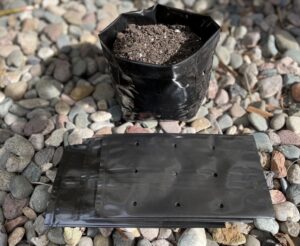
 What are Custom Vent Holes?
Custom vent holes provide a tailored solution for applications that require specific airflow, drainage, or ventilation.
For example, TDI manufactures nursery bags with custom vent hole patterns that stimulate healthier root development and help specific plants thrive in agricultural applications.
Benefits of Vent Holes
Most plant containers need vent holes to provide roots with oxygen for healthy growth and proper aeration.
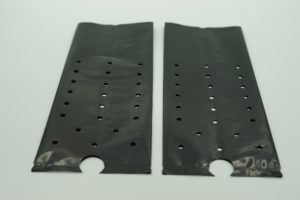 Although confusing, vent holes and drainage holes serve different purposes. Vent holes increase airflow, while drainage holes allow excess water to drain away.
Manufacturers typically place drainage holes in the bottom of the plant bag, where they prevent water logging, root rot, and plant disease by allowing excess moisture to drain away.
TDI’s Customization Options
At TDI, we customize every detail of our agricultural packaging solutions, including vent holes and drainage holes with the following options:
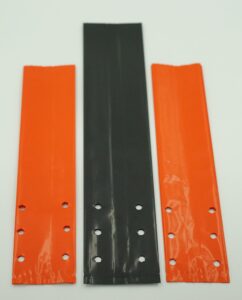
2. Location
You can place round eyelets almost anywhere on the grow bag, including the top, middle, or bottom. .
For added flexibility, arrange them in vertical or horizontal patterns, with a single row or multiple rows, according to the needs of your species.
3. Quantity
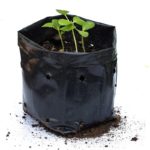
In addition to size and placement, you can customize the number of vent holes. Whether you need just a few opening or a more extensive vent pattern, we can create a design that provides the ideal balance of airflow and drainage.
4. Spacing In-Between
Whether you need eyelets positioned close together or farther apart, we can adjust the layout at your request.
To ensure consistent performance and a uniform appearance, we typically punch vent holes in straight rows.
Uses for Custom Vent Holes
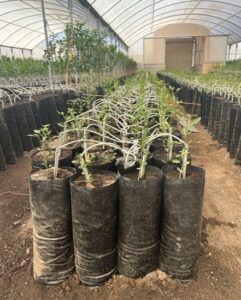 Every nursery and greenhouse has unique growing requirements based not he plant species they produce. As a result, many agricultural packaging products benefit from custom vent holes, including:
Nursery Grow Bags
Custom vent holes improve air flow and drainage in nursery grow bags, creating a healthier environment for root development.
Better root aerations help plants grow stronger and more consistently, resulting in healthier crops and higher-quality nursery production.
Air Flow Tubing
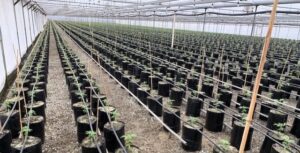 Strategically placed vent holes help air flow tubing deliver a steady, controlled flow of air.
This balanced airflow encourages healthy root development, helping crops produce stronger, more fibrous root systems.
Custom Poly Sheeting
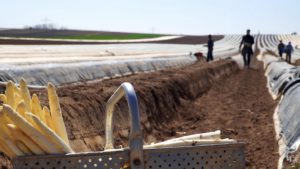 Agricultural sheeting with custom vent holes offers another effective way to improve airflow while protecting crops from environmental stress.
Growers often use this type of film to cover rows of plants, creating a healthier environment throughout the season.
Your Custom Vent Holes
At TDI, we manufacture custom poly packaging with punch holes tailored to your exact specifications, including hole size, placement, spacing, and quantity.
Contact TD today for a free quote >>